Commercial Waste Removal Richmond: Recycling and Sustainability
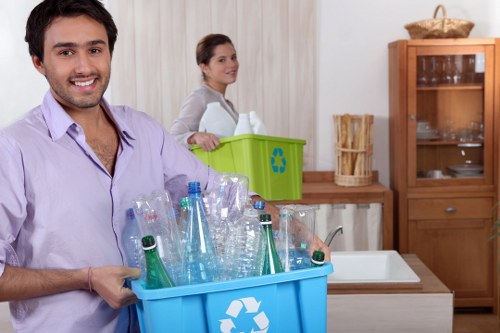 Commercial Waste Removal Richmond is evolving beyond simple collection: our focus is on creating an eco-friendly waste disposal area and a truly sustainable rubbish area for businesses across the borough. This page explains our targets, operations and partnerships that make Richmond commercial waste removal responsible, transparent and aligned with the borough's approach to waste separation. We prioritise reuse, recycling and low-carbon logistics to reduce landfill and deliver measurable environmental benefits.
Our recycling percentage target is ambitious but achievable: we aim for a 65% recycling rate for all commercial waste streams by 2030, with interim milestones of 50% by 2026. To reach this, commercial waste removal in Richmond depends on accurate segregation at source, dedicated collection routes, and investment in processing facilities. We measure progress monthly and report improvements in composition — paper, card, glass, metals, food and organic streams — to help clients understand how their waste contributes to the overall borough goal.
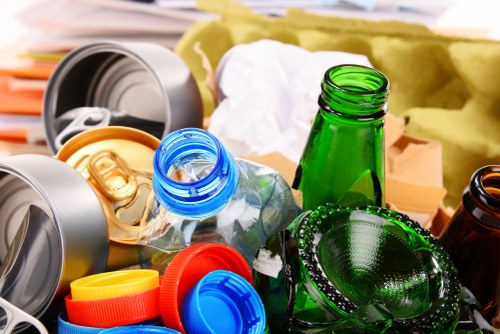 The borough's approach to waste separation informs our collection models: many local councils encourage separate bins for mixed recycling, food waste and general waste, with targeted collections for glass and textiles. Our Richmond commercial waste removal services incorporate these local standards by offering tailored on-site segregation systems and easy-to-follow signage. Typical recycling activity includes:
- Paper, cardboard and boxed packaging
- Mixed cans and plastic bottles
- Food and garden organics captured for anaerobic digestion
- Bulk construction and demolition materials directed to aggregate recycling streams
Partnerships with local charities are a cornerstone of our sustainable rubbish area approach. Instead of consigning reusable items to landfill, Richmond commercial waste removal companies coordinate with charities that accept furniture, office equipment and surplus stock. These alliances create a circular benefit: items are refurbished or redistributed, social enterprises gain inventory, and businesses receive environmental credits for reuse. We work with community groups to establish scheduled pick-ups and rapid donation routes to reduce storage time and ensure materials re-enter productive use quickly.
 In the middle of the supply chain, transfer stations and sorting hubs play a critical role. Local transfer stations near Richmond act as consolidation points where commercial loads are unloaded, sorted and forwarded to the appropriate processing plants. Our logistics link directly to these hubs to minimise double handling, cut unnecessary mileage and improve diversion rates. By co-locating sorting at established transfer stations, we enhance resource recovery and lower the carbon footprint of the overall system.
To further reduce emissions, our fleet includes low-carbon vans and optimised routes as standard for Richmond commercial waste removal operations. Electric and hybrid vehicles are deployed on dense urban routes where they offer the greatest benefits, while biodiesel or renewable fuel options are used for longer runs. Route planning software reduces empty miles and enables multi-stop pickups that combine businesses in close proximity, effectively reducing total vehicle kilometers and the associated emissions profile.
 Compliance and traceability underpin our sustainable solutions. Every commercial waste collection in Richmond is accompanied by clear documentation of destination, recycling type and diversion percentage. This transparency supports client sustainability reporting and ensures materials sent to recovery facilities are processed correctly. We also provide audit-ready manifests for waste transfers to local transfer stations and permitted recyclers.
Our staff receive regular training in waste segregation, contamination reduction and health and safety, because small changes at the point of disposal can greatly increase recovery rates. Projects include on-site seminars for commercial clients, customised labelling for bins, and trial segregation stations in high-yield premises such as restaurants and retail units. These practical steps help the wider borough strategy to separate food, glass, paper and residual waste more effectively.

Practical Steps for Businesses
- Audit your waste — understand composition and volumes to set realistic recycling targets
- Segregate at source — provide clear containers for recyclables, organics and non-recyclables
- Partner with charities — recover furniture and usable goods through scheduled donations
- Choose low-carbon logistics — request electric or hybrid vehicle collections where available
Local Transfer Stations and Processing
Our network of local transfer stations in and around Richmond enables efficient consolidation and routing to specialist recycling facilities. These stations accept segregated commercial streams and direct them to appropriate processors — glass to cullet reproducers, organics to anaerobic digesters, and dry recyclables to material recovery facilities. Close proximity to processing reduces handling time and the overall environmental impact of Richmond commercial waste removal.Engaging in a circular approach also means creating markets for recycled materials. We advocate for procurement policies that favour recycled content and collaborate with local businesses that can use recovered materials, turning recycling activity into a local resource loop. In doing so, the sustainable rubbish area concept moves from aspiration to operational reality across the borough.
Ultimately, effective commercial rubbish removal Richmond-wide depends on cooperation: businesses that sort correctly, charities that accept and reuse materials, transfer stations that process efficiently, and low-carbon vans that collect with minimal emissions. Together these elements deliver an eco-friendly waste disposal area that supports borough targets and contributes to a greener, more resilient community.
